
Nemetschek
dTwin
A visual analytics and connected intelligence platform for built assets.
Nemetschek dTwin harmonises and visualises facility data in a digital twin — bridging design, construction and operations, and supporting a Building Lifecycle Intelligence approach where data and integrations are available.
Pricing confirmed in writing by proposal. No public list price, no instant checkout, no automatic activation.



Work with us with confidence. Professional service and software subscriptions delivered by SIMBIM as an ISO 9001 & ISO 19650 certified organisation — covering proposal, licence delivery, onboarding and support, aligned with the principles of ISO 19650.
View SIMBIM certificationsWhat is dTwin
An open, horizontal digital twin layer for the built environment.
Nemetschek describes dTwin as a horizontal, open SaaS digital twin platform that fuses information from CAD/BIM, IWMS, real-time operational streams and sources connected through open API interfaces. The goal is data-driven insight across the asset lifecycle, not the replacement of your existing systems of record.
Horizontal & open
Designed to consume and link data from multiple sources rather than lock teams into a single authoring tool.
Built-asset focused
Tailored to buildings and built assets — combining geometry, scans, GIS context and operational signals.
Lifecycle perspective
Supports a Building Lifecycle Intelligence approach across design, construction and operations where configured.
Pricing
Pricing is confirmed in writing by proposal.
SIMBIM confirms Nemetschek dTwin commercial terms only after reviewing your asset portfolio, data sources and integration scope. There is no public list price, no instant checkout and no automatic activation.
- Commercial terms confirmed in writing by proposal.
- No public list price shown on this site.
- No instant checkout.
- No automatic activation.
See · Visualize
A complete, navigable view of your assets.
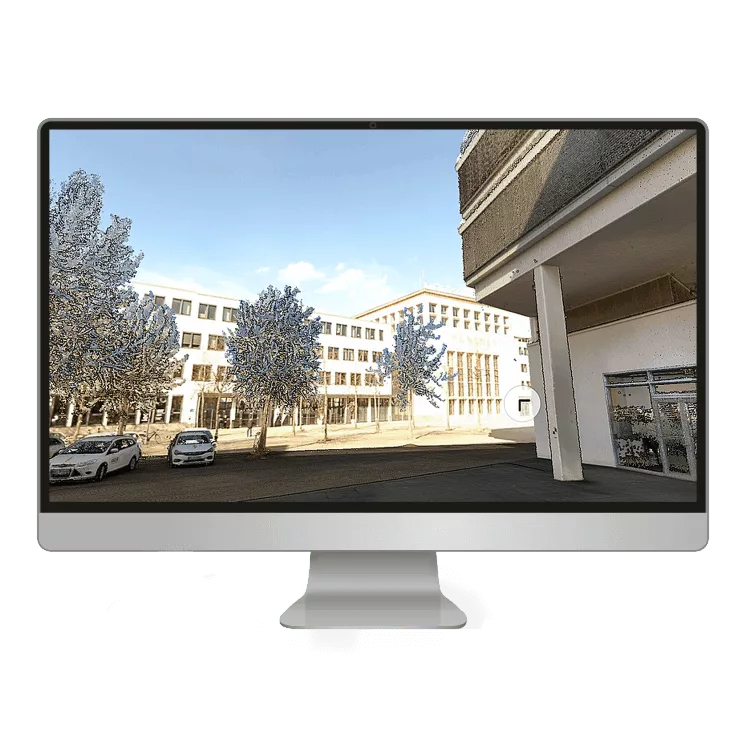
Bring BIM models, point clouds, 360 photos and GIS context together in one navigable scene, with overlays, comparisons and heatmaps that can be configured to highlight what matters.

Federated 3D scene
Walk through BIM, scans and panoramas in a single view. Useful where multiple data sources need to be reviewed against the same context.
- BIM model visualization
- Point clouds
- 360 photos and walkthroughs

Spatial & geographic context
Place assets in their geographic context with GIS data and compare design intent to as-built where data is available.
- GIS data
- Heatmaps and overlays
- Comparisons across sources
Flexible data sources
Connect sources where supported — additional connectors and configurations are scoped per project.
- Flexible data sources
- Configurable views
- Open API access
Understand · Analyze
Harmonised, contextualised building data.
Where configured, dTwin links real-time IoT signals, model data and operational sources so they can be measured, searched, filtered and reported on in one place — through customizable dashboards and an open API.
Real-time data from IoT sensors
Linkage of data sources through open API
Customizable dashboards and reports
Measure, search and filter across the model
Available signals and dashboards depend on integration scope and on the data your organisation chooses to connect.

Act · Optimize
Monitoring, reporting and decision support.
Nemetschek describes dTwin capabilities including real-time reporting and monitoring, simulations and predictions, anomaly highlighting, AI-powered learnings, and task and workorder management. These can support operational workflows where data is available and the platform is configured for the use case.

Operational decision support
- Real-time reporting and monitoring
- Simulations and predictions (vendor-stated)
- Problem and anomaly highlighting
- AI-powered learnings (vendor-stated)
- Task and workorder management

What this does not mean
These are described capabilities of the platform — not guaranteed operational outcomes, not guaranteed savings, not guaranteed CO2 reductions and not a replacement for professional facility management responsibility. Outcomes depend on data quality, integration scope and organisational adoption.
Data sources · Technology
The data layers dTwin can bring together.
The platform is designed to consume a range of geometric, scanned, geographic and operational sources. Coverage and depth depend on the integrations you scope.

BIM
BIM models can support operational building management and serve as a basis for planning, execution and operation where configured.

Laser scanning · point clouds
Point clouds derived from laser scanning can create a virtual replica of a building and can be combined with model and panorama data.

360 photogrammetry
360 photos, cameras and drones can support visualisation and walkthroughs of built assets where capture workflows are in place.

IoT
IoT sensor data can be linked with 3D building visualisation for monitoring and insights where the relevant sensors and connectors are configured.
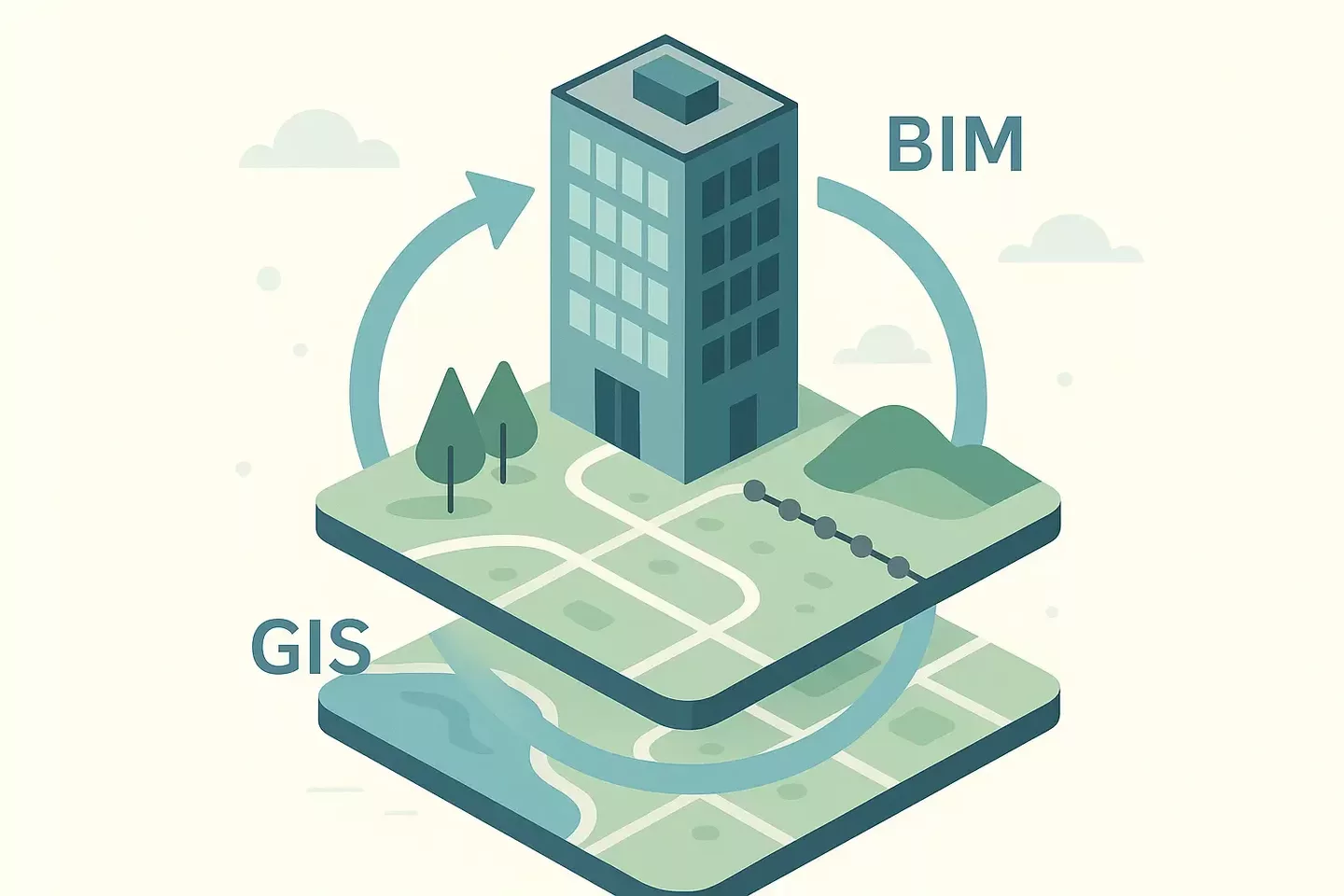
GIS
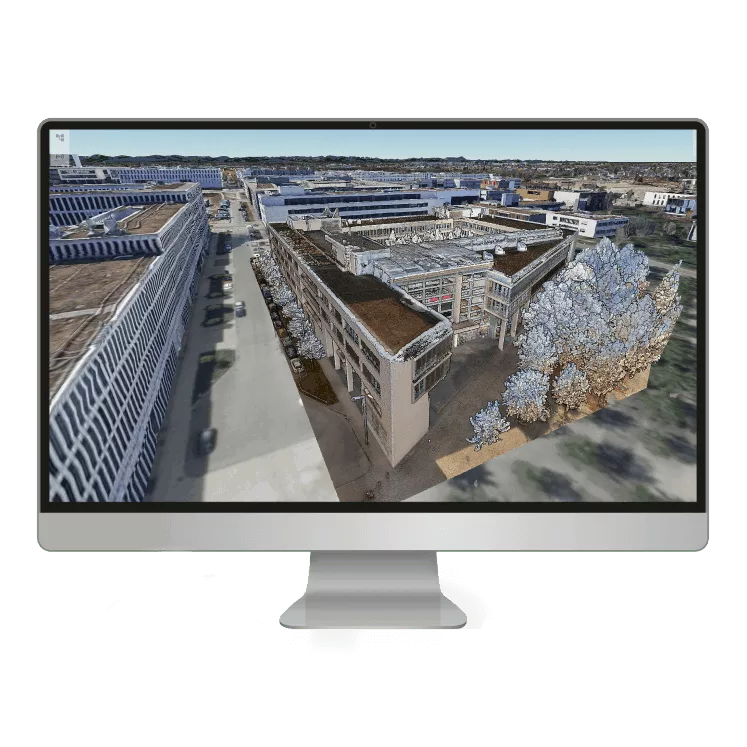
Geographic context can be brought into the scene through GIS integration to support portfolio and infrastructure scenarios.
Open API
Nemetschek describes an open API approach so dTwin can be linked with adjacent systems through scoped integrations.
Lifecycle
Lifecycle workflows
The four-stage lifecycle structure — Reality Capture, Design, Construction and Operations — is consistent with dTwin's design-to-operation positioning. The sub-items below are taken from the Nemetschek dTwin solutions page and should be read as capabilities the platform can support where configured, where data is available and depending on integration scope.
Reality Capture
Bringing scanned and captured reality into a navigable, shareable workspace.
- Point clouds
- 360 panoramas
- Streamed visualization
- Points of interest
- Collaboration
- Advanced toolsets
- GIS integration
Design
Using federated model data alongside captured reality to review and document design intent.
- BIM / CAD / drawing processing
- Model federation
- Model element classification
- Comparison and documentation
- Dashboards and insights
- Extensive search
- Reality capture meets BIM
- Design-tool integration
- Overlays, clipping and measurements
Construction
Supporting site teams with shared model, document and issue context where configured.
- Document management
- Model and issue collaboration
- As-built verification
- Handover workflows
- Dashboards
Operations
Connecting model, asset and operational data so building teams can review and act on what is happening.
- IoT streams
- Real-time insights
- Up-to-date asset information
- Asset management
- Navigation / localization
- Ecosystem connections (CAFM, energy analysis, specialized tools)
- Data-driven decisions
- Remote inspection
Lifecycle continuity, automated handover, complete operational insight and full digital twin readiness are not implied — each stage depends on data, configuration and integration scope.
Use cases
Where teams put dTwin to work.
The use cases below mirror the Nemetschek dTwin use-cases page and are scoped per project. Coverage, automation and depth depend on the connectors and data sources made available.

AEC/O integrations
Bringing design, construction and operations tools into one connected context.

IoT data streams
Visualising live sensor signals against the 3D building model where sensors and connectors are configured.

Data harmonisation & linkage
Linking heterogeneous building data so it can be queried, filtered and reported together.

Assets management
Working with up-to-date asset information in the context of the building model.

Localization & navigation
Helping teams locate spaces, assets and points of interest inside a built environment.

Realtime notifications & insights
Surfacing operational events and anomalies through dashboards and notifications where configured.
Why SIMBIM
Why evaluate dTwin through SIMBIM.
SIMBIM is an ISO 9001 and ISO 19650 certified BIM consultancy and implementation partner of Nemetschek dTwin for the Iberian market and Canada. We help teams understand whether dTwin is the right fit, scope a realistic pilot and avoid over-promising.
Independent scoping
Honest review of which dTwin capabilities apply to your buildings, data and operational maturity — and which do not.
Implementation-aware advice
Guidance that accounts for the integrations, data quality and adoption work a real dTwin programme requires.
Lifecycle perspective
Designed to plug into your existing BIM, openBIM and operational workflows rather than replace them.
Commercial
Pricing is confirmed in writing by proposal.
There is no public list price for Nemetschek dTwin on this site, no instant checkout and no automatic activation. SIMBIM will confirm commercial terms after reviewing your organisation, asset portfolio, data sources, integration scope and implementation requirements.
- Scoped proposal — not a generic quote
- Evaluation and pilot scope discussed up front
- Onboarding and support delivered through SIMBIM's ISO 9001 processes

Process
How a dTwin engagement runs with SIMBIM.
A predictable, four-step path from first conversation to a scoped evaluation. Every step is described as a SIMBIM service — no automatic activation.
Discovery
We review your portfolio, current data sources, BIM maturity and the questions you want dTwin to answer.
Scoping & proposal
We confirm integration scope, suggested pilot buildings, success criteria and commercial terms in writing.
Evaluation / pilot
Where appropriate, we coordinate a vendor walkthrough and a scoped evaluation on representative assets.
Onboarding & support
If you proceed, onboarding and support are delivered by SIMBIM, an ISO 9001 and ISO 19650 certified organisation.
FAQ
Common questions about dTwin and SIMBIM.
Ready to scope a Nemetschek dTwin evaluation?
Tell us about your buildings, your data and the operational questions you want answered. We will respond with a scoped proposal — no automatic activation, no list-price assumptions.