Articles in this section
- A Case study at European BIM Summit 2021: collaboration challenges during COVID-19
- Solving remote collaboration challenges with Revu and Archicad
- Automatic creation of External Thermal Insulation Composite Systems (ETICS) in Archicad
- A simplified IFC guide for general Revit and ARCHICAD users
- An evidence of customer success: ARCHICAD BIM Essentials
- A Simple Guide to Emergency Remote Work
- ARCHICAD Sample Projects
- Digital communication for both BIM and non-BIM people
- Have you ever heard about OIR, AIR, PIR and EIR?
- ARCHICAD Template for a Preferred Design Process
Digital communication for both BIM and non-BIM people
By SIMBIM Solutions
Originally published on 3 February 2020. Versions, prices, offers and partnerships may have changed.
Bluebeam Revu is a multipurpose productivity software that is used in day-to-day activities of many people in construction industry. On numerous occasions, we have presented this intelligent solution (Revu) to builders, architects, engineers, and public administrators, where with no surprise we witnessed how the capacities of Revu could take full attention of audiences. So, in this post, I would like to briefly explain what is Revu and how it ease design communications in both BIM workflows and 2D deliverables.
I would say Bluebeam Revu is the most complete PDF solution for users who want to have control over their digital documentation management in a design or construction process. This productivity software has more than 300 functionalities that are facilitating and optimizing the work processes. In this post I selected 3 favorite functions and one favorite BIM workflow that is known to me by my audience feedback as “Wow, this is great! I don’t how much time I've wasted so far without knowing these features".
1. Document comparison
One of the most boring project auditing tasks is to compare different versions of documents to identify modifications. Well, this process can manually take hours, but Revu will do this in a snap by highlighting each point that is changed between construction documents.
2. Revision management
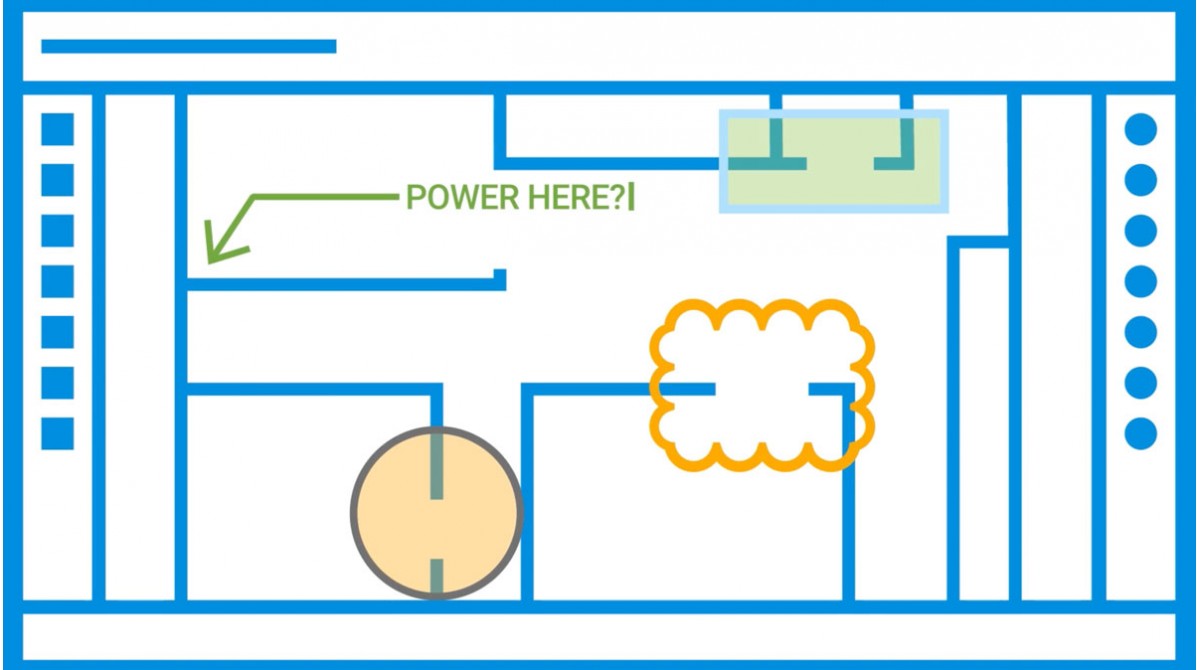
Another “WOW” feature of Revu is its markup and annotations. In a traditional way we would do this with a pen or marker, or perhaps with other digital highlights and annotation tools. But in Revu we are not just placing markups and annotation, we are also including all the information we think is necessary to that annotation such as who made the comment and for who, when the comment is made and when do we expect an answer, etc.
3. Drawings hyperlinking
OCR scanning is not a new function (OCR convert the scanned texts to readable and editable text), but Revu intelligently identify the codes of our drawings in the title block and then hyperlink them to the sheet index. Now when we click on the index items, we will automatically jump into the drawings that we want to see.
4. BIM Workflow
On the one hand, Revu did not reinvent the wheel, it just facilitates and optimize many day to day document management tasks. But on the other hand, it brought a real high values solution to connect people who work in BIM environment and the ones who do not!
This is my 4th favorite function that I will explain through connection between BLUEBEAM Revu and GRAPHISOFT ARCHICAD. Revu has a plugin for various BIM applications, including Revit and ARCHICAD, that helps to generate 2D and 3D PDF documents (still today 3D PDF seems to be strange to many professionals, in another post I will talk about advantages of 3D PDFs). Connecting with BIM authoring software (for example ARCHICAD) goes beyond process of review and direct communication with those who are not working with BIM applications, it makes an integrated workflow. Let’s explain this with a step by step scenario:
Step 1: ARCHICAD user publish a set of PDF documents (for example 2D drawings) from ARCHICAD and then send it to someone who use BLUEBEAM Revu to review the drawings.
Step 2: Evidently, the Revu user will use the markup function to provide feedback and comments for the possible revisions on the document
Step 3: Revu user send back the PDF documents to ARCHICAD user to apply the changes. Here is the surprise, when ARCHICAD user import back the documents into ARCHICAD, the REVU-ARCHICAD connection will be a smart tool to identify the annotations and only import the comments into ARCHICAD.
I’m sure if you are ARCHICAD user, most probably you have a correct guess! REVU-ARCHICAD connection will convert all the PDF comments and annotations into ARCHICAD markup available from Markup tool. But in addition to importing the annotations in the correct place of our drawings, the connection imports all relevant information linked to each comment on PDF.
Does this communication process familiar to you?
If you want to know more about this workflow, do not miss our upcoming workshop explaining Revu workflow with connection to ARCHICAD on Friday 7th February from 15:00 to 19:00. Attendance to this workshop is free, but make sure you are registered in advance.
Call to Actions:
Related articles
- A Case study at European BIM Summit 2021: collaboration challenges during COVID-19
- Solving remote collaboration challenges with Revu and Archicad
- Automatic creation of External Thermal Insulation Composite Systems (ETICS) in Archicad
- A simplified IFC guide for general Revit and ARCHICAD users
- An evidence of customer success: ARCHICAD BIM Essentials