Articles in this section
- Studio in Revu 2020, designed for real remote work!
- Increase your work performance with Archicad BIM Manager certification program
- GRAPHISOFT BIM Manager with terminologies of Spanish regulations
- GRAPHISOFT BIM Manager Certification Program 2020 in Spanish
- SIMBIM Support Kit for ARCHICAD users during COVID-19 crisis
- Emergency license for ARCHICAD
- Statement by GRAPHISOFT SE regarding the novel coronavirus (COVID-19)
- Why ARCHICAD Start Edition? (Reasonable investment vs Renting)
- Become a Certified ARCHICAD BIM Professional
- ARCHICAD is free for students, educators, researchers, and schools
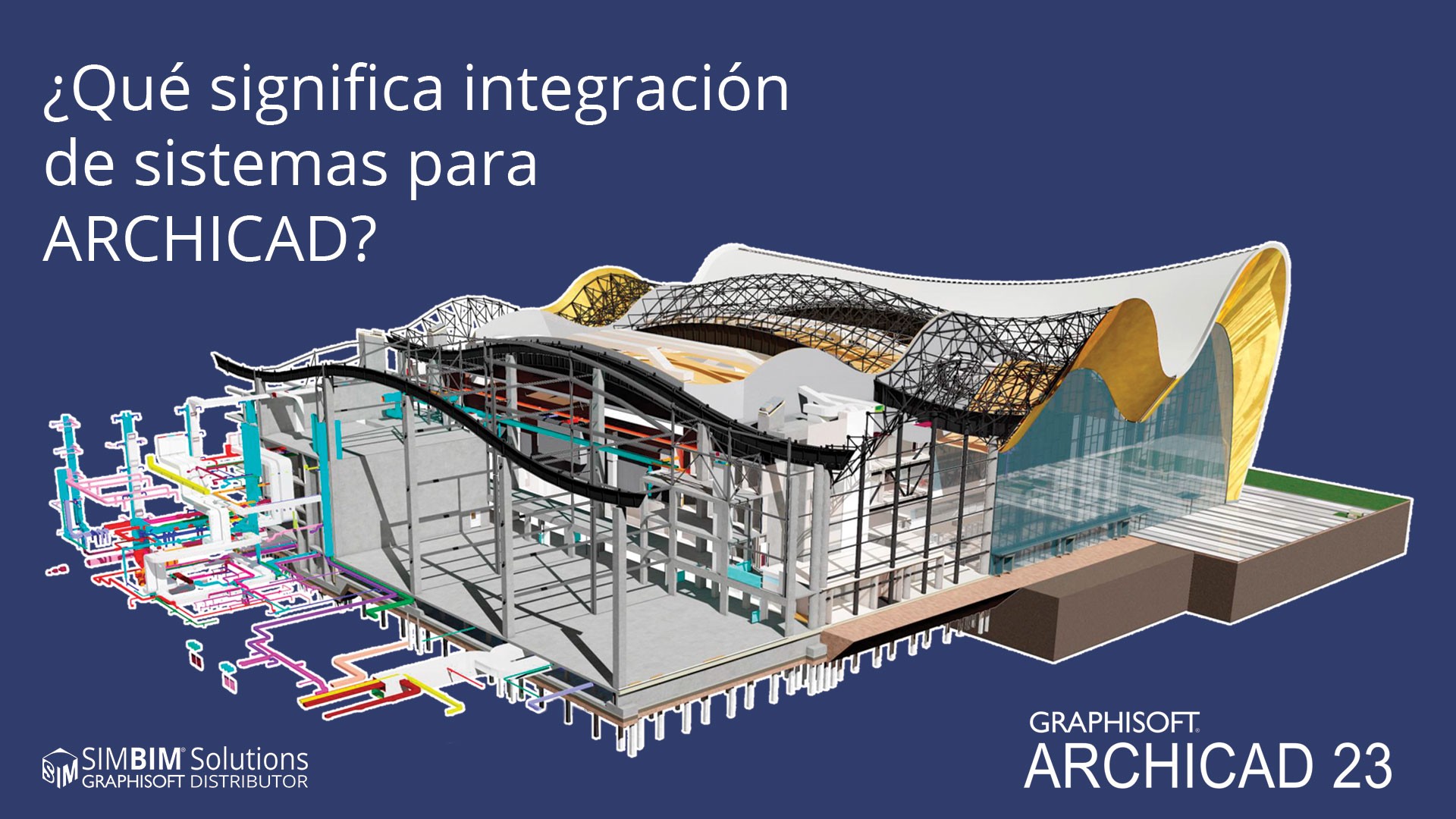
What does system integration mean for ARCHICAD?
By SIMBIM Solutions
Originally published on 1 August 2019. Versions, prices, offers and partnerships may have changed.
ARCHICAD 23 Seamless Integrations
ARCHICAD widely known as one of the best (or the best) BIM authoring software that provides most comprehensive IFC import and export with absolute control over all the parameters of the elements within an IFC file. It is a true OPENBIM solution, but parallel to be one of the best solutions for OPENBIM interoperability, ARCHICAD 23 provides a unique system integration with selected pioneer BIM solutions to improve productivity and quality of BIM-based design, build, and building operations.
So, what does system integration mean for ARCHICAD?
It means existing BIM data will be synchronized with other BIM data management, processing and analysis solutions without any requirement for end users to leave ARCHICAD or deal with exhausting export and import process. In other words, it enables relevant building information to flow between different software, which means integrated information sharing between different disciplines which is an important asset to ever business organization. This feature eliminates the delay between data collection and data analysis and massively improves productivity and provides greater flexibility while increase accuracy of information and data. Now let’s see what the main system integrations for ARCHICAD 23 are:
The ARCHICAD-dRofus connection:
This connection allows building space and requirement data from ARCHICAD BIM model be integrated into dRofus database. It means architects can capture and organize client planning requirements and use these to validate and propose design alternatives.
The Rhino-Grasshopper-ARCHICAD connection:
This connection enables Rhino/Grasshopper and ARCHICAD to communicate directly in order to create and manipulate a BIM model in full or in part, through Grasshopper’s visual scripting interface. It is a seamless and bidirectional connection, which means design data can flow from ARCHICAD to rhino-grasshopper and vice-versa to enable designers add algorithmic editing functionality to their BIM environment.
The ARCHICAD-Solibri connection:
This connection enables Solibri and ARCHICAD to have seamless connection for code and constructability checking at any stage of the design. This smart integration sends only those elements in the ARCHICAD model that have been changed, resulting in faster round-trip collaboration.
The ARCHICAD-Bluebeam connection:
This connection provides a unique solution for collaboration between non-BIM and BIM professionals. It means different disciplines that use 2D-PDF documents can send their markups and change requests directly from PDF to ARCHICAD BIM environment. This significantly speeds up the processing of RFIs and RFCs.
The ARCHICAD-BIMcloud-BIMx connection:
ARCHICAD natively connect with the other GRAPHISOFT pioneering collaboration and teamwork product which is known as BIMcloud. This native connection provides real-time, secure, model-based teamwork between end-users, regardless of the size of the design project, the location of the offices, or the speed of the Internet connection. This integration provides a full BIM ecosystem by providing a seamless connection between ARCHICAD as BIM authoring software, BIMcloud as BIM collaboration server, and BIMx as BIM data access solution through almost all types of smart phones and tablets.
These integrations are not something I show you in a brief or short video, but to have better and deeper understanding of ARCHICAD system integration with other productivity software, I invite you to watch following recorded webinars that my colleagues explain these integrations in detail:
View the recording of ARCHICAD 23 webinars
If you like this blog post please be so kind to provide your feedback and comment or simply like and share this post.
Related articles
- Studio in Revu 2020, designed for real remote work!
- Increase your work performance with Archicad BIM Manager certification program
- GRAPHISOFT BIM Manager with terminologies of Spanish regulations
- GRAPHISOFT BIM Manager Certification Program 2020 in Spanish
- SIMBIM Support Kit for ARCHICAD users during COVID-19 crisis